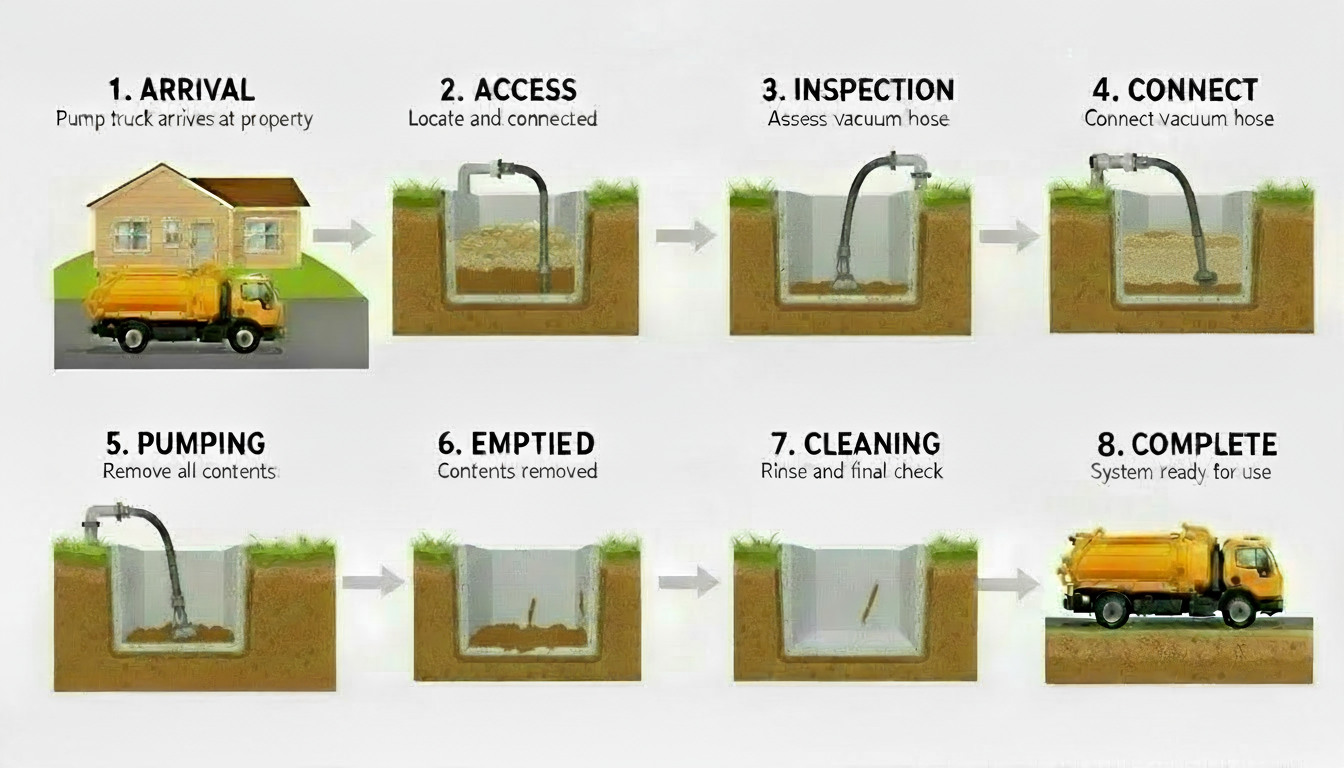
Knowing what to expect during septic pumping makes the process stress-free. Here's a step-by-step look at what happens when a professional pumps your septic tank.
Before the Service Visit
To prepare for your appointment:
- Know your tank location: If you have records showing where the tank is buried, have them ready
- Clear access: Move vehicles, furniture, or items blocking the tank area
- Mark the lid if visible: A flag or stake helps if there's grass or landscaping over it
- Note any issues: If you've noticed problems (slow drains, odors), mention them
Step 1: Locating the Tank
If the tank location isn't known, the technician will:
- Follow the main sewer line from the house
- Use probes to locate the buried tank
- Dig to expose the access lid(s)
Tip: Knowing your tank location saves time. Some homeowners install risers (extensions that bring the lid to ground level) for easier future access.
Step 2: Accessing the Tank
The technician removes the tank lid to access the interior. Most tanks have one or two access points. Both compartments (if present) need to be pumped for complete service.
Step 3: Initial Inspection
Before pumping, the technician typically observes:
- Scum layer thickness (floating material)
- Sludge depth (settled solids)
- Liquid level (should be at outlet pipe level)
- Any obvious damage or issues
Step 4: Pumping
The pumping process itself:
- Vacuum hose insertion: A large hose is lowered into the tank
- Pumping begins: The truck's vacuum system pulls out the contents
- Stirring: The technician may use the hose to agitate and break up solids
- Complete evacuation: All sludge, scum, and liquid are removed
The actual pumping typically takes 20-30 minutes for a standard residential tank, though this varies based on tank size and accessibility.
Step 5: Post-Pumping Inspection
With the tank empty, the technician can see:
- Tank walls and floor condition
- Inlet and outlet baffles (are they intact?)
- Signs of cracks or damage
- Root intrusion (if present)
The technician will note any issues observed and discuss them with you.
Step 6: Closing Up
After pumping and inspection:
- The lid is replaced and secured
- Soil is backfilled if digging was required
- The area is left as neat as possible
Step 7: Disposal
The waste doesn't just disappear. It's transported to an approved disposal facility where it's processed according to environmental regulations. At Shell Knob Septic Pumping, disposal is included in our service price—no hidden fees.
How Long Does It Take?
A typical service visit takes approximately:
- 30-45 minutes if the tank is easily accessible
- 45-60 minutes if some digging is required
- 60+ minutes if the tank is hard to locate or access
What You Might Notice Afterward
After pumping, it's normal for:
- Drains to flow faster (especially if they were slow)
- No odors (if you were noticing them before)
- The tank to refill with liquid within a week of normal use (this is normal)
Tips for Your Next Pumping
- Install risers: Makes future access easier and cheaper
- Mark the location: Note measurements from fixed points (house corners, etc.)
- Keep records: Document the date and any observations
- Set a reminder: Schedule your next pumping in 3-5 years
Ready to schedule your pump-out? Shell Knob Septic Pumping serves the Table Rock Lake area. Standard service is $275. Call 907-252-8026.