A septic system is a self-contained wastewater treatment system that processes and disposes of household sewage on your property. Understanding how it works helps you maintain it properly and avoid costly repairs.
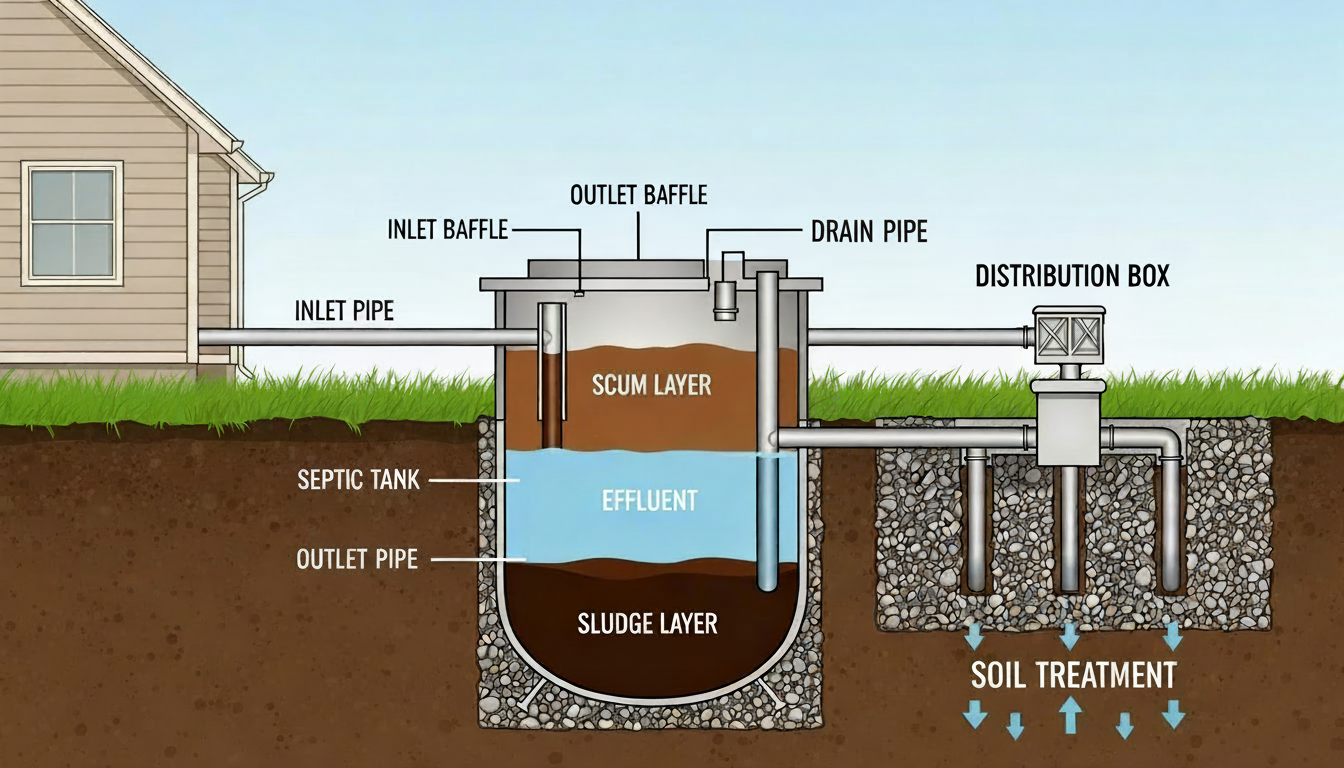
The Three Main Components
Every septic system has three essential parts that work together:
1. The Septic Tank
The septic tank is a watertight container, typically made of concrete, fiberglass, or polyethylene. When wastewater enters the tank, three things happen:
- Solids sink: Heavy materials settle to the bottom, forming sludge
- Oils float: Fats, oils, and grease rise to the top as scum
- Liquids exit: The relatively clear water in the middle flows to the drain field
Bacteria inside the tank break down some of the solids, but not all. This is why regular pumping is essential—to remove the accumulated sludge and scum.
2. The Drain Field (Leach Field)
The drain field consists of perforated pipes buried in gravel-filled trenches. When the liquid effluent from the tank enters the drain field:
- It slowly disperses through the pipes into the gravel
- Natural bacteria in the soil further treat the wastewater
- The treated water eventually returns to the groundwater
The drain field requires undisturbed soil above it—never park vehicles or build structures over your drain field.
3. The Soil
The soil provides the final treatment step. As effluent percolates through the soil, bacteria, viruses, and nutrients are filtered out or broken down. This natural process protects groundwater and nearby water bodies.
The Treatment Process
Here's what happens when you flush a toilet or run water down a drain:
- Wastewater exits your home through the main drain line
- It enters the septic tank where solids settle and separation occurs
- Bacterial breakdown begins in the tank's anaerobic environment
- Clarified liquid flows to the drain field through the outlet pipe
- Percolation and filtration occur as water moves through soil
- Treated water rejoins the natural groundwater system
Why Regular Maintenance Matters
The bacterial action in your tank can't break down all solids. Over time, sludge accumulates at the bottom and scum thickens at the top. Without regular pumping:
- Solids can escape to the drain field, causing clogs and failure
- The tank can overflow, leading to sewage backups
- Drain field repairs can cost thousands of dollars
Local Considerations for Shell Knob / Table Rock Lake Area
The soil conditions around Table Rock Lake vary considerably. Some properties have rocky or clay-heavy soil that affects drain field performance. Additionally:
- Lake proximity matters: Systems near the lake require proper function to protect water quality
- Seasonal use: Vacation homes may need different maintenance schedules than full-time residences
- Older systems: Many lake-area homes have aging septic systems that benefit from more frequent attention
Educational Resource: This public educational video from state environmental agencies explains how septic systems process wastewater. Free for public use.
How Does a Septic System Work? - Public Educational Resource
Need your system pumped? Regular pumping every 3-5 years helps prevent expensive problems. Call Shell Knob Septic Pumping at 907-252-8026 for service in the Table Rock Lake area.